
In a series about a girl who solves mysteries through logic, observation, and medical knowledge, the moment Maomao understands the truth about Jinshi becomes one of her most important character tests. This is not only about noticing a secret. It is about how someone as practical as Maomao reacts when the truth could change her safety, her position, and her relationship with one of the most powerful people around her.
So, when does maomao find out about jinshi? The answer is not as simple as one single dramatic confession. Maomao gathers clues over time, avoids admitting certain truths when they are inconvenient, and slowly reaches a conclusion through deduction. This article contains major spoilers, so if you want to experience Maomao’s journey of discovery chapter by chapter, you can read The Apothecary Diaries on ManhwaClan.
Quick Answer: When Does Maomao Find Out?
| Format | When | How | Maomao’s Reaction |
|---|---|---|---|
| Light Novel | Around Volume 4 onward | Gradual deduction and later confirmation | Calm, analytical, and cautious |
| Manga, Square Enix version | Mid-series arc | Visual clues, behavior, and direct incidents | Pragmatic avoidance before acceptance |
| Manga, Shougakukan version | Similar story range | Different pacing and framing | Same core logic-based response |
| Anime | Season 2 reaches key clues | Especially through the waterfall and frog incident | Denial, discomfort, and practical self-protection |
The most important point is that Maomao is not simply told the truth in a neat confession scene. She figures things out herself, or at least enough to understand that Jinshi is not what he pretends to be. That distinction matters because it is completely consistent with her character.
The Clues Maomao Was Already Collecting
The question when does maomao find out about jinshi works best when you look at the clues she had already been collecting. Maomao does not solve mysteries by waiting for someone to explain them. She notices contradictions, tests possibilities, and adjusts her behavior when the evidence becomes too strong to ignore.
Clue 1: Physical Anomaly
Jinshi is introduced as a beautiful eunuch, but Maomao has enough medical knowledge to notice when a body does not match the story being told about it. This becomes one of the clearest signs that something about him is false.
Clue 2: Power Level Mismatch
Jinshi’s influence is far beyond what a normal official in his apparent position should have. He can move through sensitive palace spaces, command attention, and affect decisions in ways that suggest a much deeper source of authority.
Clue 3: The Emperor’s Behavior
The way the Emperor and others respond to Jinshi contains subtle clues. The interactions do not always feel like simple superior-and-subordinate exchanges. There is an unusual layer of familiarity, caution, and political weight.
Clue 4: Gaoshun’s Protectiveness
Gaoshun does not behave like a typical aide. His loyalty feels older and more personal. He watches Jinshi with the patience of someone who has been protecting him for a long time, not just serving him as part of a job.
Clue 5: Jinshi’s Blind Spots
Jinshi is clever, controlled, and politically aware, but he also has strange blind spots. At times, he seems sheltered in ways that do not match his public image. That contradiction tells Maomao there is more to his background than the role he performs.
The Moment of Realization
Maomao’s realization is not written like a typical dramatic reveal. There is no huge emotional breakdown, no long confession under moonlight, and no sudden gasp of betrayal. That would not fit her.
Instead, she pieces together the evidence like a diagnosis. One symptom alone might not be enough, but multiple symptoms create a pattern. Jinshi’s body, influence, relationships, and treatment by others all point toward the same conclusion.
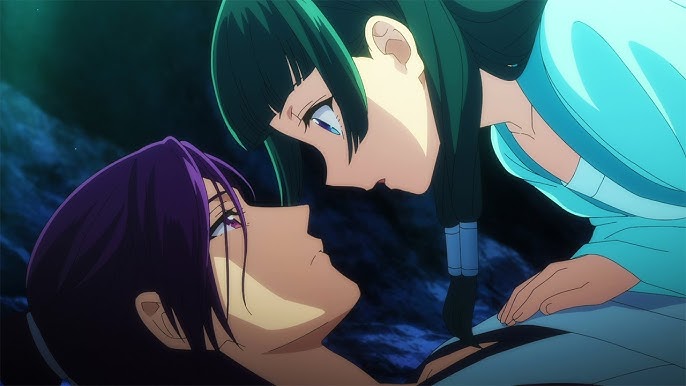
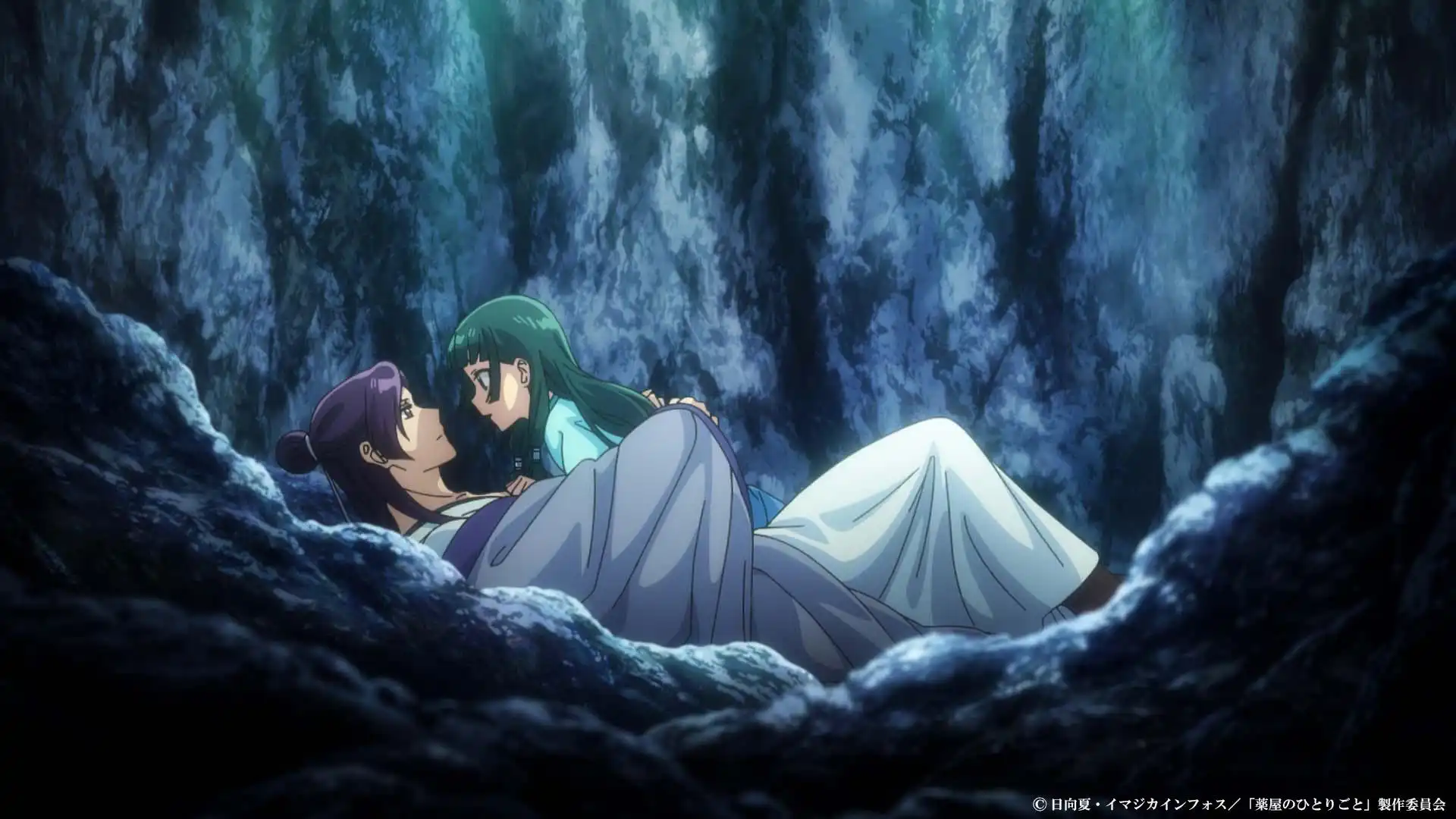
The waterfall and frog incident is one of the most famous turning points because it forces Maomao to confront physical evidence she would rather ignore. Her reaction is almost funny, but it also reveals something serious about her survival instincts. She knows that acknowledging the truth could make her life more dangerous.
That is why the scene works so well. Maomao is not foolish. She understands more than she says. But because knowledge in the palace can be dangerous, pretending not to know can be safer than confronting the truth directly.
Maomao’s Reaction: The Most In-Character Response Possible
Many readers expect Maomao to react with anger, shock, or emotional pain. Instead, she processes the truth as information. She categorizes it, analyzes the risk, and adjusts her behavior.
That response can frustrate readers who want a more romantic or dramatic confrontation. But it is exactly what makes the moment strong. Maomao has always been practical first. Her instinct is not to ask, “What does this mean for my heart?” Her instinct is to ask, “What does this mean for my safety?”
The answer is complicated. If Jinshi is not a normal official, then being close to him is far more dangerous than Maomao originally assumed. His identity could pull her into imperial politics, succession concerns, and attention she does not want.
This is why she does not immediately confront him. Part of it is strategy. Part of it is emotional avoidance. Maomao does not like situations she cannot fully control, and Jinshi’s truth is exactly that kind of situation.
Maomao’s discovery is just one layer of the larger secret surrounding Jinshi. For the full truth about his origins and what it means for everyone around him, read who is jinshi’s mother.
How the Dynamic Shifts After Maomao Knows
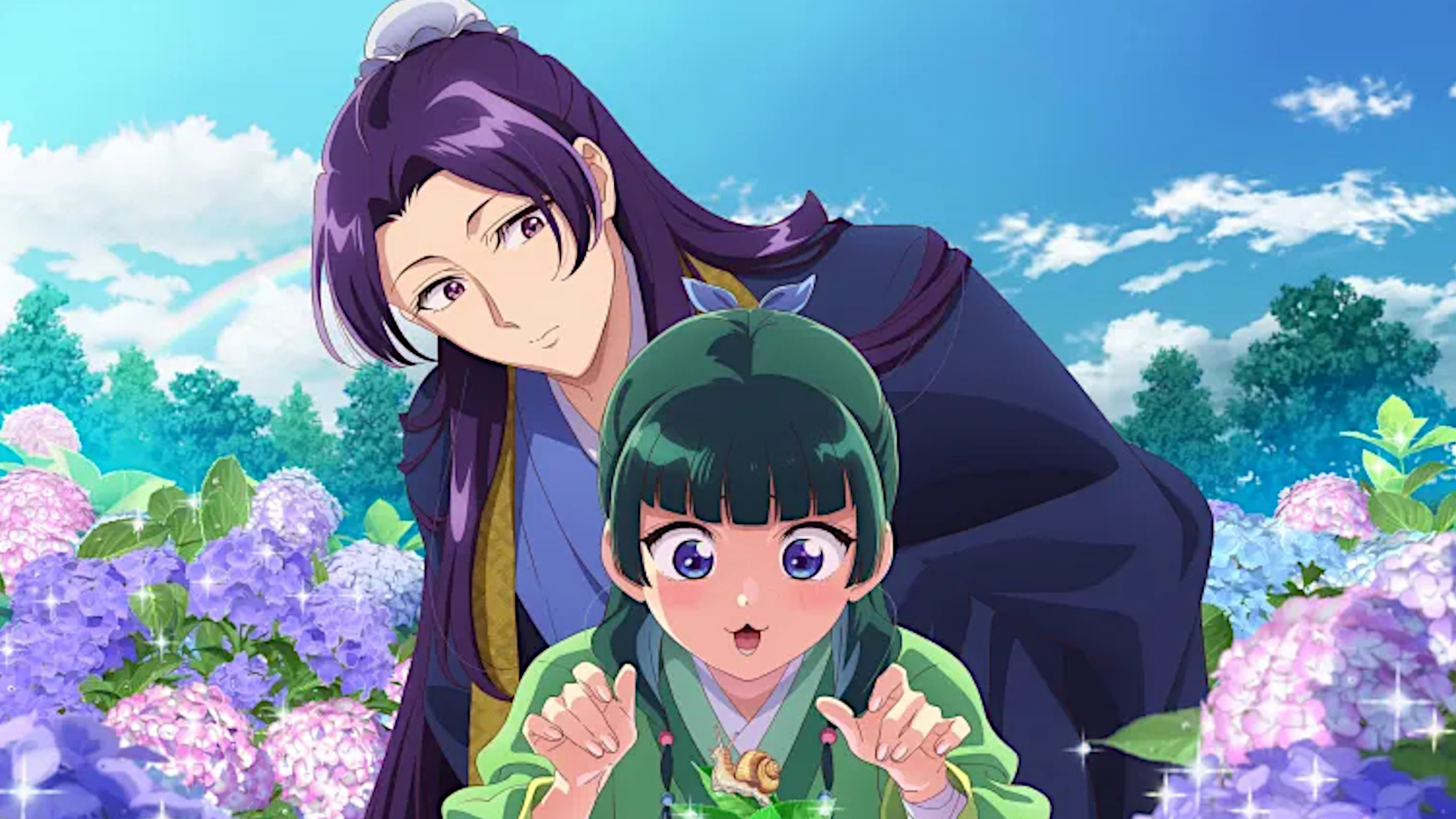
Before the reveal, Maomao treats Jinshi as a powerful but annoying official. He is beautiful, troublesome, useful, and dangerous in a general way. She avoids him when possible and works with him when necessary.
After she understands more about him, her responses become more carefully calibrated. She still acts blunt, but her awareness changes the meaning behind that bluntness. Every interaction now carries an added layer of political risk.
Jinshi can sense when Maomao is avoiding something, even if he does not always know exactly what she is thinking. That creates a new tension between them. Maomao holds information that Jinshi may not realize she has fully processed.
This creates a subtle inversion of power. On paper, Jinshi is the stronger figure. He has status, protection, and imperial connections. But Maomao has knowledge, and in The Apothecary Diaries, knowledge can be just as powerful as rank.
The romance implications also become more complicated. Knowing Jinshi’s true identity does not make Maomao more comfortable with him. It makes her more cautious. If he were only a charming official, the situation would already be troublesome. If he is tied to imperial blood, the stakes become much higher.
Why This Moment Is a Masterclass in Character Writing
The reveal works because the story respects Maomao’s intelligence. A weaker series might keep her oblivious just to extend the mystery. The Apothecary Diaries does not need to do that. It allows Maomao to notice the truth while still giving her believable reasons not to act on it directly.
This is why when does maomao find out about jinshi is less important than how she finds out. The timing matters, but the method matters more. She discovers the truth through observation, not emotional confession.
The moment also arrives when readers are ready. By the time Maomao understands, the audience has already seen enough clues to feel the answer is earned. The reveal does not feel random. It feels like the story finally letting the pattern become clear.
Imagine how differently other characters would react. Hongniang might understand the political danger immediately. Lihaku might be shocked and loud. Gaoshun would likely be exhausted because he has been protecting the secret all along. Maomao’s reaction stands out because it is quiet, controlled, and deeply practical.
This moment works because the cast is written with clear personalities and consistent logic. For a broader breakdown of why the ensemble is so effective, read the apothecary diaries characters.
Light Novel vs Manga: Which Version Handles It Better?
The light novel gives the reveal more internal texture. Because readers can follow Maomao’s thoughts more closely, her logic, avoidance, and emotional restraint become easier to understand.
The Square Enix manga version has a different strength. It uses expressions, framing, and silence to show what Maomao understands without making her explain everything out loud. This fits the series’ style very well because so much of the story depends on what people do not say.
The Shougakukan manga version follows the same core story but can feel slightly different because of pacing and visual emphasis. Some moments may feel more direct, while others rely on atmosphere.
The anime adds voice acting, timing, and physical comedy, especially in scenes where Maomao tries not to acknowledge what is directly in front of her. For many viewers, this makes her avoidance even funnier and more revealing.
In general, the light novel is best for understanding Maomao’s reasoning, while the manga and anime are stronger for visual and emotional impact. Each version highlights a different side of the same reveal.
FAQs
When does Maomao find out Jinshi is a prince?
Maomao begins putting the truth together gradually, with major confirmation around the mid-series material, especially from the light novel Volume 4 range onward. She does not learn everything through one simple confession.
What chapter does Maomao discover Jinshi’s identity?
The exact chapter depends on the adaptation you are reading. The safest answer is to follow the corresponding mid-series arc rather than rely on one universal chapter number, because the light novel, manga versions, and anime handle pacing differently.
Does Maomao figure out Jinshi herself or is she told?
Maomao largely figures it out herself. She collects clues from Jinshi’s body, behavior, authority, and the way others treat him. This is why the reveal feels consistent with her intelligence.
How does Maomao react when she finds out about Jinshi?
Maomao reacts with caution rather than drama. She processes the truth as dangerous information, then adjusts her behavior instead of confronting Jinshi immediately.
Does Jinshi know that Maomao knows his secret?
Jinshi can sense that Maomao understands more than she says, but their dynamic is built on avoidance, implication, and tension. Neither of them always says the full truth directly.
Does the anime cover Maomao finding out about Jinshi?
Yes, the anime reaches major clues connected to Jinshi’s secret, especially in Season 2. However, the wider political meaning of his identity continues to unfold beyond a single scene.
Conclusion
So, when does maomao find out about jinshi? She begins figuring it out gradually, with major confirmation around the mid-series material rather than one clean dramatic reveal. That slow realization is exactly what makes the moment so strong.
Maomao’s reaction is one of the best character moments in The Apothecary Diaries because it is completely consistent with who she is. She does not collapse, confess, or confront immediately. She observes, calculates, and protects herself.
To experience this reveal properly and follow Maomao’s deductions from the beginning, visit ManhwaClan and read The Apothecary Diaries today.

I’m Mina Miller, a blog writer at ManhwaClan. I write about manhwa, manga, webtoons, and trending comic topics to help readers discover new stories and enjoy their favorite series more.